




Allegations of Chemical Attacks in Sudan
Reports from humanitarian organizations and international monitors have documented cases of civilians in Sudan suffering from suffocation, burns, and respiratory complications. These injuries are consistent with the effects of chemical and toxic agents, which are prohibited under international law.
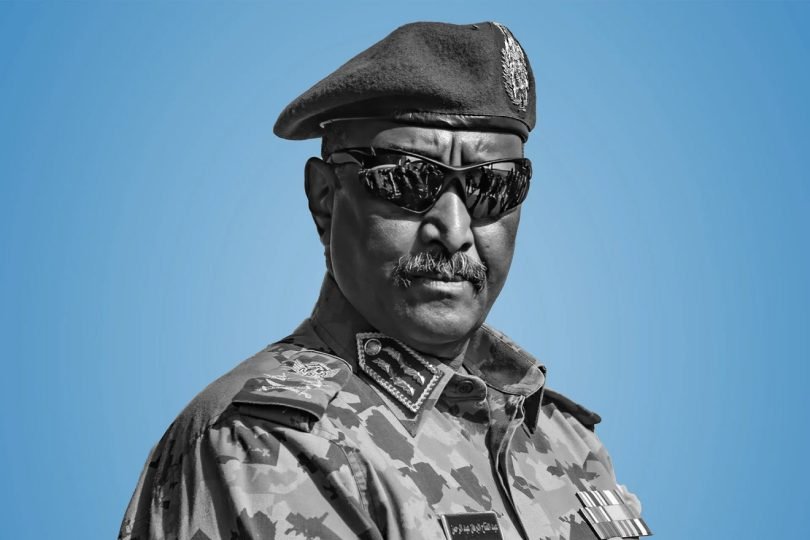
The accusations point directly at Abdel Fattah al-Burhan, identified as the commander ultimately responsible for authorizing or permitting such weapons to be deployed by Sudanese forces during the conflict. Civil society groups stress that these allegations, if proven, amount to grave violations of human rights and war crimes under international conventions.
The Accused Becomes the Investigator
In response to the growing pressure, al-Burhan announced the formation of a national committee to investigate the allegations. The decision immediately raised widespread questions: How can the very figure accused of ordering chemical attacks also claim authority to oversee their investigation?
Legal observers note that the credibility of any inquiry collapses when the accused assumes the dual role of suspect and investigator. In this case, critics argue, the committee is not only compromised by its composition,drawn from ministries and institutions under his control,but also by its mandate, which lacks independence from the accused party.
Calls for Independent Accountability
Humanitarian organizations, including Sudanese rights groups, have underscored that war crimes allegations require impartial review. The use of chemical weapons has long been considered a “red line” in international law, demanding oversight by neutral and independent bodies.
Analysts stress that only an international investigative mechanism can provide transparency and credibility. Domestic committees, particularly those created by the same leadership implicated in the charges, cannot reassure either victims or the global community that justice will be served.
Legal and Moral Responsibility
The issue at stake is not merely procedural but fundamental: accountability. By attempting to investigate himself through a body under his own authority, al-Burhan has blurred the essential line between prosecutor and suspect. Critics argue that this maneuver risks turning the investigation into little more than a political shield, designed to deflect outrage rather than uncover the truth.
International law is explicit in prohibiting the use of chemical weapons, and violations demand consequences. Justice cannot be achieved if those suspected of responsibility control the process. For Sudanese civilians affected by these attacks, the credibility of the inquiry is as vital as its outcome.
Demands from Civil Society
Sudanese activists and humanitarian voices have been clear: accountability cannot be manufactured internally. Social media campaigns and public statements emphasize that victims deserve more than symbolic committees. Instead, they call for the involvement of impartial experts, international observers, and judicial mechanisms capable of operating outside the influence of those accused.
These calls reflect a broader struggle for justice in Sudan, where years of conflict have too often left perpetrators unpunished. The allegations of chemical weapon use represent one of the gravest charges to date, intensifying demands for genuine accountability.
What Is at Stake
The outcome of this controversy carries weight beyond Sudan’s borders. If a national leader accused of chemical attacks can investigate himself without consequence, observers warn it could set a dangerous precedent in conflict zones worldwide. International humanitarian law is built on the principle that accountability must be impartial; undermining that principle weakens protections for civilians everywhere.
For now, the eyes of both Sudanese citizens and the international community remain fixed on whether the allegations will be addressed with integrity,or buried beneath the veneer of an internal review