



Lawsuits have been percolating over President Trump’s unprecedented attempt to undermine birthright citizenship since the beginning of his second term, but it took until Friday for the Supreme Court to announce that it will hear the case on the merits.
That order left the door open to class action lawsuits as a means of challenging the policy, which the ACLU used after the summer ruling. Now the Court will decide whether the policy violates the Citizenship Clause — “All persons born or naturalized in the United States, and subject to the jurisdiction thereof, are citizens of the United States and of the State wherein they reside” — and the law that codifies it.
The Court has yet to announce a date for oral argument.
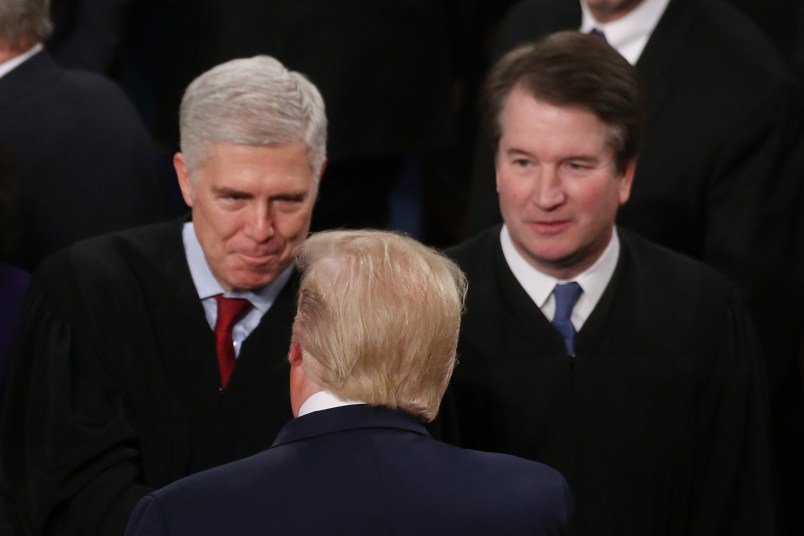
It will be a significant test of the right-wing justices’ loyalty to the president. The theory, once fringe, has permeated conservative legal thought in the Trump era.
A previous iteration of the fight over Trump’s executive order — that would deprive the children of “temporary visitors” and “illegal aliens” of automatic citizenship if they’re born in the United States — had reached the Court already, although the Court did not rule on the actual question of whether Trump’s order complied with the Constitution. As a result of that case, in June, the Court dramatically narrowed district courts’ ability to issue nationwide injunctions, the method by which multiple federal judges had blocked the new birthright citizenship policy from going into effect.
That order left the door open to class action lawsuits as a means of challenging the policy, which the ACLU used after the summer ruling. Now the Court will decide whether the policy violates the Citizenship Clause — “All persons born or naturalized in the United States, and subject to the jurisdiction thereof, are citizens of the United States and of the State wherein they reside” — and the law that codifies it.
The Court has yet to announce a date for oral argument.
It will be a significant test of the right-wing justices’ loyalty to the president. The theory, once fringe, has permeated conservative legal thought in the Trump era.
A previous iteration of the fight over Trump’s executive order — that would deprive the children of “temporary visitors” and “illegal aliens” of automatic citizenship if they’re born in the United States — had reached the Court already, although the Court did not rule on the actual question of whether Trump’s order complied with the Constitution. As a result of that case, in June, the Court dramatically narrowed district courts’ ability to issue nationwide injunctions, the method by which multiple federal judges had blocked the new birthright citizenship policy from going into effect.
That order left the door open to class action lawsuits as a means of challenging the policy, which the ACLU used after the summer ruling. Now the Court will decide whether the policy violates the Citizenship Clause — “All persons born or naturalized in the United States, and subject to the jurisdiction thereof, are citizens of the United States and of the State wherein they reside” — and the law that codifies it.
The Court has yet to announce a date for oral argument.
It will be a significant test of the right-wing justices’ loyalty to the president. The theory, once fringe, has permeated conservative legal thought in the Trump era.