
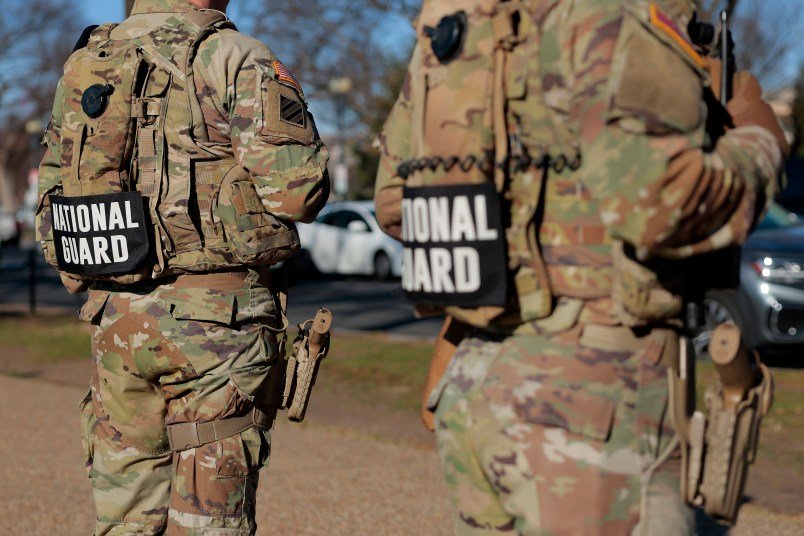
A federal judge enjoined the Trump administration’s federalization of the California National Guard Wednesday, writing that it has “sent California Guardsmen into other states, effectively creating a national police force made up of state troops.”
“It is profoundly un-American to suggest that people peacefully exercising their fundamental right to protest constitute a risk justifying the federalization of military forces,” Breyer wrote.
While the Supreme Court dallies over an appeal out of the National Guard lawsuit in Illinois, the lower courts have continued to operate, holding trials and handing down rulings. The high court’s silence is conspicuous, as it completed a full briefing weeks ago.
Read the ruling here:
The administration’s attempts to identify incidents in California requiring the ongoing presence of the Guard were weak. They strung together a few small protests, misbehavior by lone actors and even incidents from other states. They also argued that even the threat of future protest justified the perpetual presence of armed soldiers.
“It is profoundly un-American to suggest that people peacefully exercising their fundamental right to protest constitute a risk justifying the federalization of military forces,” Breyer wrote.
While the Supreme Court dallies over an appeal out of the National Guard lawsuit in Illinois, the lower courts have continued to operate, holding trials and handing down rulings. The high court’s silence is conspicuous, as it completed a full briefing weeks ago.
Read the ruling here:
“That is shocking,” he wrote. “Adopting Defendants’ interpretation of Section 12406 would permit a president to create a perpetual police force comprised of state troops, so long as they were first federalized lawfully.”
The administration’s attempts to identify incidents in California requiring the ongoing presence of the Guard were weak. They strung together a few small protests, misbehavior by lone actors and even incidents from other states. They also argued that even the threat of future protest justified the perpetual presence of armed soldiers.
“It is profoundly un-American to suggest that people peacefully exercising their fundamental right to protest constitute a risk justifying the federalization of military forces,” Breyer wrote.
While the Supreme Court dallies over an appeal out of the National Guard lawsuit in Illinois, the lower courts have continued to operate, holding trials and handing down rulings. The high court’s silence is conspicuous, as it completed a full briefing weeks ago.
Read the ruling here: